Yes. A standard carrying case with a custom insert can work for a first private-label jump starter order if the entire kit fits the existing shell and the closed sample passes your handling checks. Keep the shell if it can accommodate the exact starter, clamp assembly and every item in the retail kit. The insert changes how those parts sit and come out of the case. The shell still fixes the available footprint, depth and closure.
Three routes for a first order
| Route | When to consider it | What to quote separately |
|---|---|---|
| Standard case and standard insert | The stock layout already fits the intended kit and the existing finish is acceptable. | Case and insert, any permitted branding or retail sleeve, and packed sample. |
| Standard case with custom insert | The shell has room, but the unit, clamp module or accessories need different pockets or a better grip opening. | Stock case, insert material and cutting or forming, design and sample work, any insert setup, branding and assembly. |
| New shell design | No acceptable stock case meets the packed size, closure or shape requirement. | Shell design and tooling, insert, samples and revisions, branding and per-unit kit packing. |
Reusing the shell avoids commissioning a new shell mold for that route. Ask which insert process the supplier proposes, whether it needs tooling or setup, and which minimum quantities apply to the shell, insert and printed items separately. A stock shell does not establish the minimum order for a finished branded kit. If the brief is mostly about brand presentation, quote the standard interior with an approved exterior mark or printed sleeve before changing the insert.
Start with the usable interior at its narrowest points, including rounded corners, the closure edge and lid features. Compare it with the exact production kit rather than the outer dimensions of an empty case. Lay out the jump starter, clamp jaws, inline module and cable as they will be packed. For a kit with an inflator hose, include the coiled hose and its fitting. A clamp can fit the footprint while its module sits too high for the lid, and a tight pocket can make the starter awkward to lift out.
The SENFLY T25 product page lists clamps, an inflation hose, nozzles and a charging cable alongside the unit. If you are quoting a hard case for this type of kit, measure the starter in its intended packing position. Check clearance around the handle and controls, then allow room for the actual clamp assembly and coiled hose. Ask the supplier for usable cavity dimensions and the clearance under the closed lid.
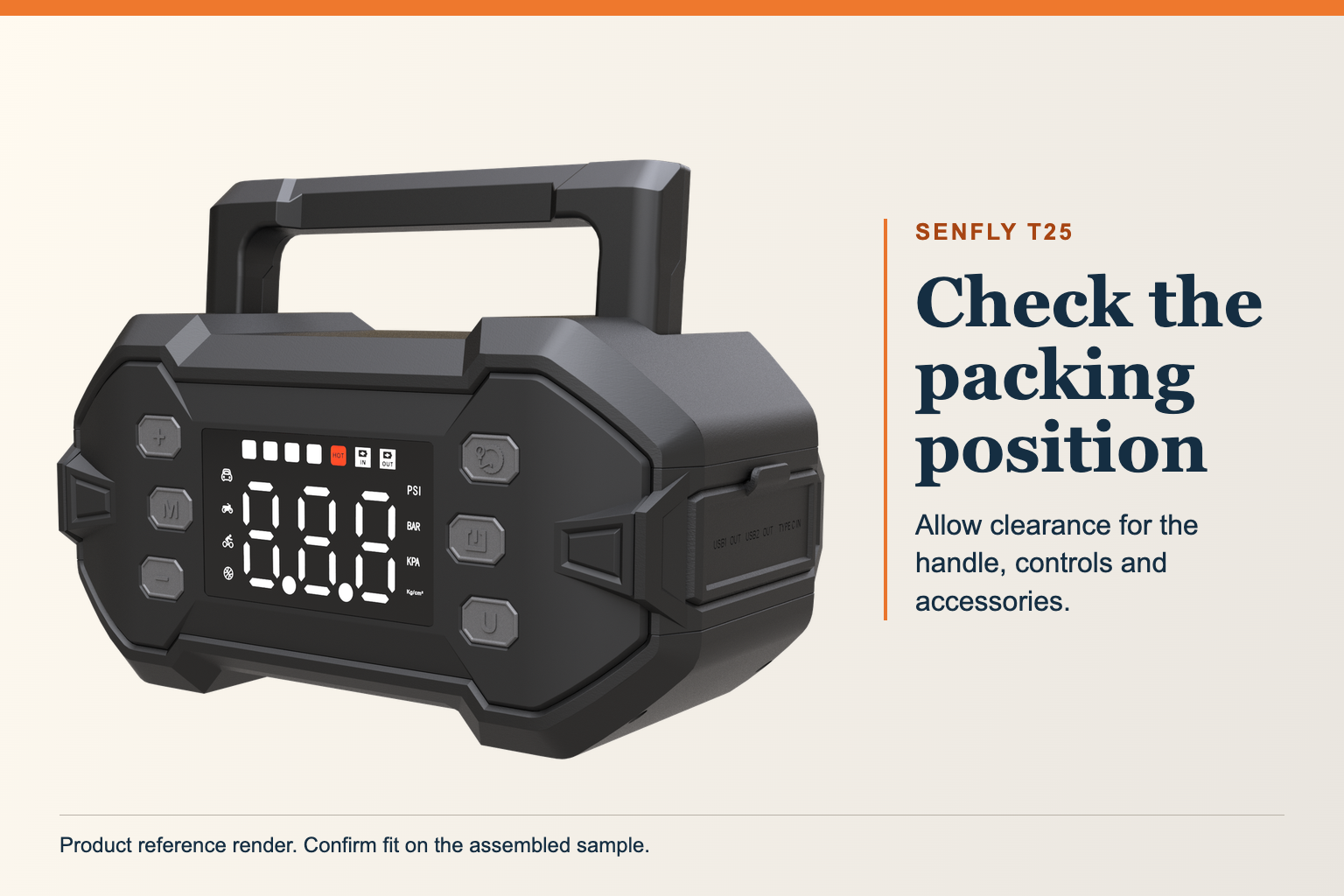
SENFLY T25 product render with the handle shown open. Confirm the packing position and accessory layout on the assembled sample.
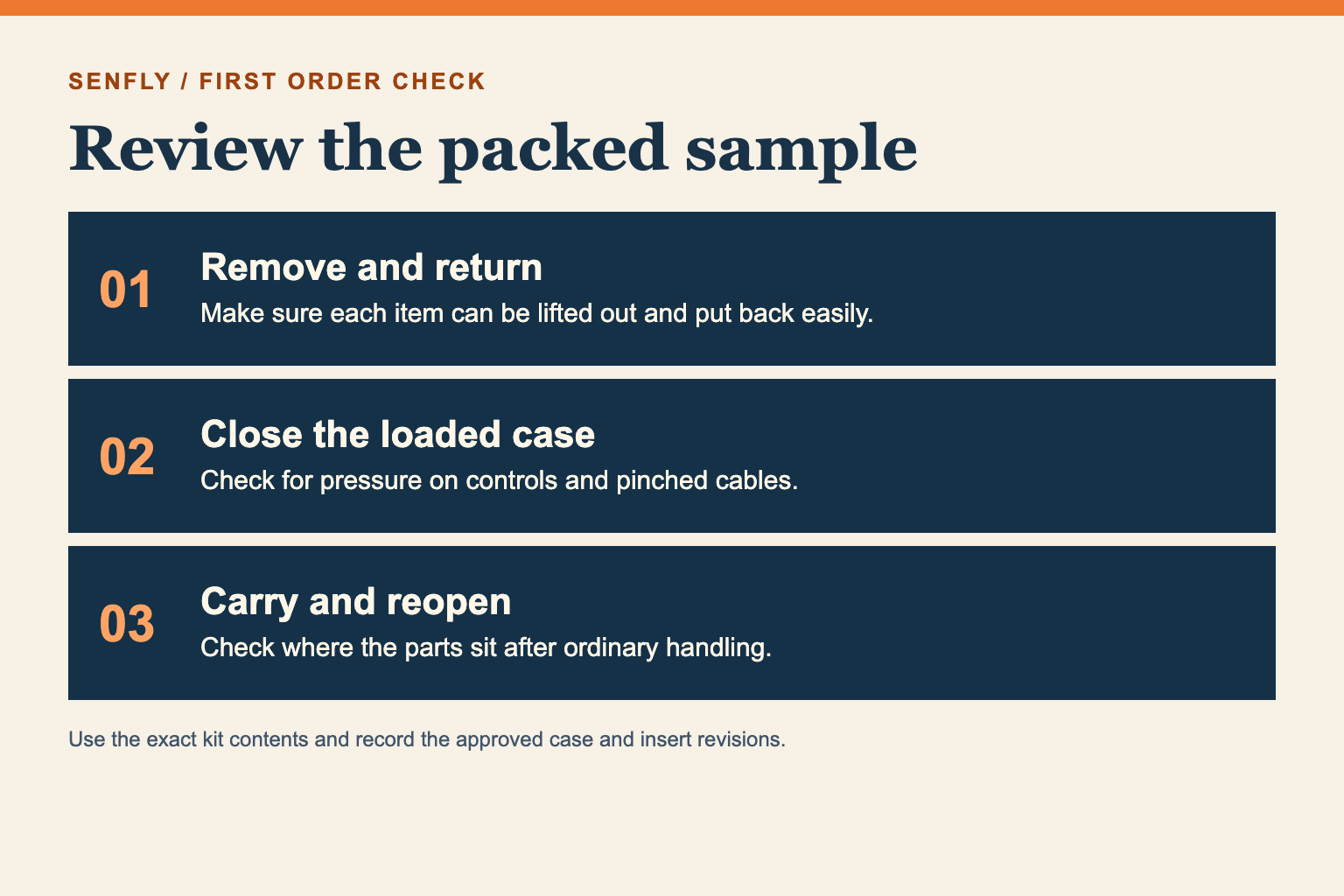
Use the fully loaded sample to check removal, closure and retention.
What to document before releasing the first order
| Check | What the buyer should verify |
|---|---|
| Identity and layout | Record the stock case code and revision, insert drawing revision, material and exact kit list. Ask for an open-case photo showing each approved component in its assigned position. |
| Removal and closure | Lift out and return each part. Close and reopen the loaded case normally. Check whether any lid features press on buttons, clamp jaws or fittings, or pinch a cable at the closure. |
| Retention and presentation | Check that parts remain in their pockets during ordinary carrying, then inspect the kit on reopening. Review the sample logo placement and legibility. Agree any additional performance test separately. |
| Reorder reference | Keep the approved sample ID and photos with the purchase order. Recheck fit if the case, clamp assembly, hose or insert changes. |
Send SENFLY a first-order packaging brief with the target market, estimated quantity, exact kit contents, preferred case envelope and branding requirement. Ask for the stock case reference, proposed insert method, an itemized quote and a fully packed approval sample. SENFLY’s OEM and ODM overview covers the broader project scope.

SENFLY T46 Premium Car Jump Starter 1000A 12V Portable Battery Booster Up to 6.0L Gas Diesel Engine.
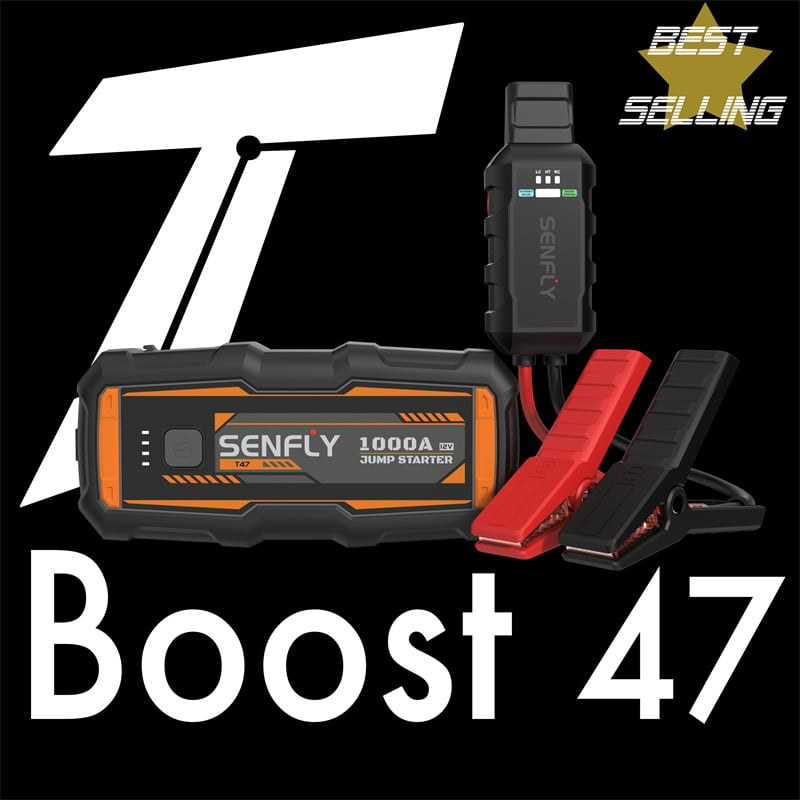
SENFLY T47 Premium Car Jump Starter 1000A 12V Portable Battery Booster Up to 6.0L Gas Diesel Engine.
 Hot News
 EN