Meta Description: Confused about jump starter types? We compare lithium and lead-acid battery jump starters across performance, weight, price, and durability to help you decide.
Not all jump starters are created equal. The two main types – lithium-ion and lead-acid – have distinct advantages and limitations. Understanding these differences helps you choose the best option for your needs.
Let's dive into a comprehensive comparison.
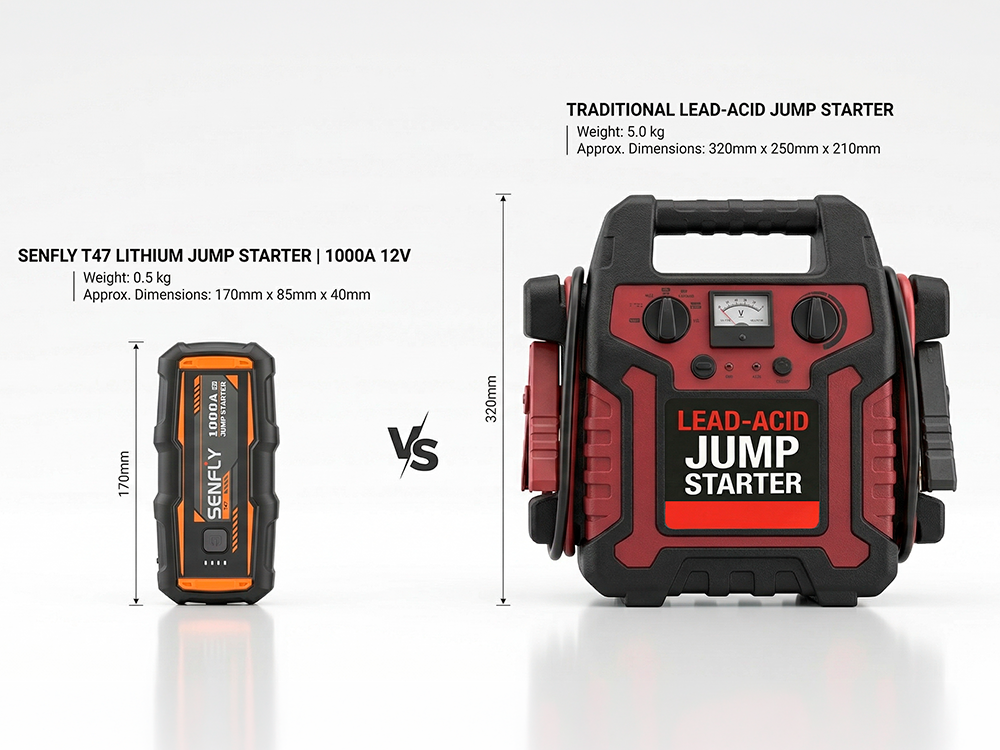
| Feature | Lithium-Ion | Lead-Acid |
| Weight | 1-3 lbs (0.5-1.5 kg) | 10-20 lbs (4.5-9 kg) |
| Size | Compact, pocket-sized | Large, bulky |
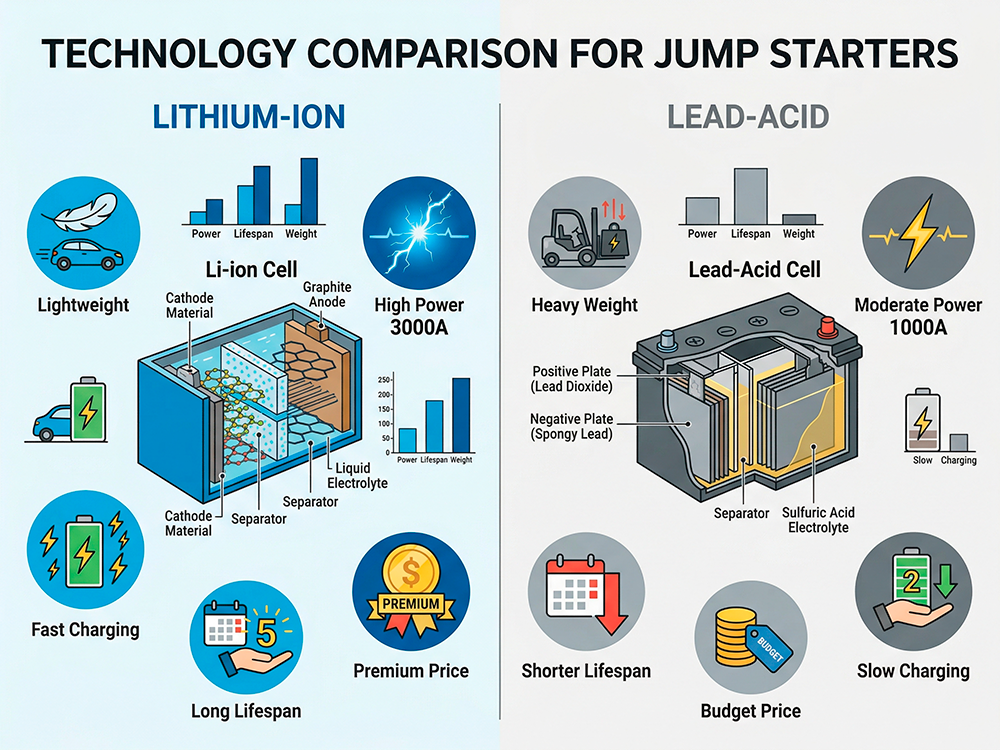
| Peak Amps | 800-3000A | 500-1000A |
| Battery Life | 3-5 years | 2-3 years |
| Charge Retention | 6-12 months | 1-3 months |
| Temperature Range | -4°F to 140°F | 32°F to 100°F |
| Price Range | $50-$200 | $80-$150 |
| Recharge Time | 2-4 hours | 8-12 hours |
✅ Advantages
1. Ultra-Portable
· Weighs 80% less than lead-acid
· Fits in glove compartment or center console
· Easy to carry for multiple vehicles
2. Higher Peak Power
· Delivers 600-3000A in compact form
· Better for larger engines and diesel vehicles
· More reliable in cold weather
3. Longer Shelf Life
· Holds charge for 6-12 months
· Less maintenance required
· Ready when you need it
4. Multi-Function Capability
· USB ports for device charging
· Can power laptops (with PD output)
· Built-in LED lights and displays
· Tire inflator can be built-in
❌ Disadvantages
· Higher initial cost
· Sensitive to extreme temperatures
· Requires quality BMS (Battery Management System)
✅ Advantages
1. Lower Cost
· More affordable upfront
· Good for budget-conscious buyers
· Widely available
2. Temperature Tolerance
· More forgiving in moderate conditions
· Less sensitive to heat exposure
3. Proven Technology
· Decades of reliable performance
· Simple, straightforward design
· Easy to understand and use
· Heavy and bulky
· Shorter charge retention
· Slower recharge time
· Limited peak amperage
· Requires regular maintenance
Cold Weather Starting (-10°C / 14°F)
| Type | Success Rate | Notes |
| Lithium (Quality) | 85-95% | With pre-warming |
| Lithium (Budget) | 60-75% | Performance drops |
| Lead-Acid | 40-60% | Significantly reduced |
Choose Lithium-Ion If:
· ✅ You want portability and convenience
· ✅ You have multiple vehicles
· ✅ You travel frequently
· ✅ You need emergency phone charging
· ✅ You live in cold climates
· ✅ Storage space is limited
Choose Lead-Acid If:
· ✅ Budget is the primary concern
· ✅ You have a fixed garage location
· ✅ You don't mind the weight
· ✅ You use it regularly (not for emergency storage)
· ✅ You prefer traditional technology
For most modern drivers, lithium-ion jump starters offer the best value in 2026. The combination of portability, power, and multi-function capabilities makes them ideal for:
· Daily commuters
· Road trip enthusiasts
· Fleet managers
· Emergency preparedness kits
Invest in quality – a reputable lithium jump starter from a trusted brand will serve you reliably for years.
While lead-acid jump starters have their place, lithium-ion technology has become the clear winner for most applications. The dramatic improvements in safety, performance, and convenience justify the slightly higher investment.
Ready to upgrade? [Browse our premium lithium jump starters] with industry-leading warranties.
 Hot News
 EN
EN