“When you tried to start the vehicle, what did you hear?” A driver who heard a click and a driver who heard the engine turning at its usual speed may both tell you, “The jump starter didn’t work.” Their answers help you decide whether to ask about the kit, refer the vehicle for diagnosis or send the unit for assessment.
Write down the driver’s description. Did nothing happen? Was there one click? Did the engine turn slowly, or did it turn normally without starting? If the driver remembers an indicator on the pack or clamps, record what they saw. An existing photo can help. You can open the case from that account without asking the driver to repeat the attempt.
If the engine turned normally but never ran, a workshop can check the vehicle for other causes. For instance, a fuel-supply problem can leave an engine cranking without starting. A click alone also leaves several possible causes. AAA’s explanation of common starting symptoms gives examples of both.
“A diesel van” still leaves out the details that matter. Ask for the year, model, engine size and starting-system voltage. Then pull up the product listing or quotation the customer relied on. Compare its stated applications with that particular van.
Next, match the returned unit and clamps to the order. For example, the SENFLY T46 is a 12 V jump starter with several battery options. A model name can get you to the right product family. The order line and unit label help identify which version the customer received. If the charge level before the attempt is unknown, leave it open. The reading you see at the counter is today’s reading.
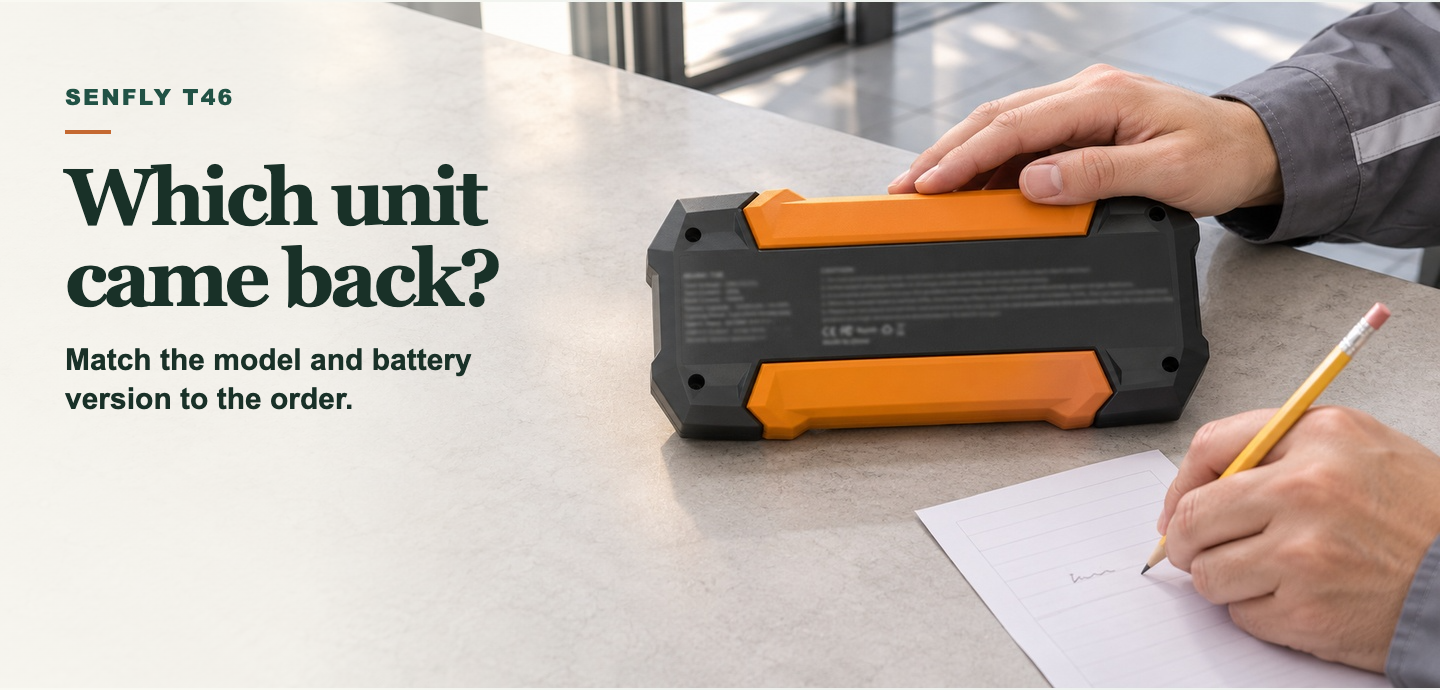
At the service counter, the T46’s rear label helps identify the unit. Check the order for the battery version and note which clamps the customer used.
Three situations a distributor can act on
| What you know | Next action |
|---|---|
| The order and the returned kit don’t match. | The distributor checks the order and packing record, then resolves the configuration discrepancy with the supplier. Review any listing that promised a broader application than the agreed version covers. |
| The kit matches the order. The engine turned at normal speed but didn’t start. | Refer the vehicle to a qualified workshop. Add any findings to the case. Keep a separate record of any warning or damage reported on the kit itself. |
| The kit and intended vehicle match, but the engine barely turned or the pack showed a warning. | Give the supplier the order reference, unit and clamp identification, and the driver’s observations. Ask whether the technical team needs the unit, the clamps or both. Confirm the return arrangements before dispatch. |
SENFLY offers technical support for distributors. Its T46 after-sales FAQ describes a service option in which factory technicians assess returned units. For a private-label order, check the service arrangement agreed for that shipment before promising a replacement or credit.
A message to the supplier might read, “The T46 and clamps match our order. The driver of the 12 V diesel van heard one click. We’ve attached the engine details and a photo of the clamps used. The driver couldn’t confirm the charge level before the attempt. Would you like to assess this kit?”
Contact SENFLY about a unit you supplied with the model, order reference, intended vehicle and what happened during the original attempt.
 Hot News
 EN