
 EN
EN
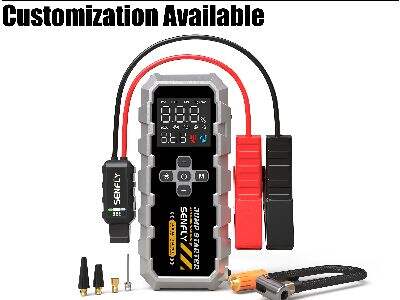
Jumping a car with jumper cables is one of those daunting tasks we’re forced to face when it alone. It’s necessary to know how to jump-start your car properly to avoid damaging and/or injury. The myth that jumping a car is a simple, easy feat is untrue for everyone. We at SENFLY aim to help you jump start your car the right way to avoid the wrong circumstances. Let’s discuss mistakes to look out for, along with the proper procedure of how to jump-start a car alone.
The biggest mistake that one makes when 12V JUMP STARTER a car alone is that they incorrectly connect the jumpers cables to the battery terminals. When connected incorrectly the jumper cables cause a spark and have the potential of messing up the cars’ electronics, and even cause a battery explosion. The red jumper must be attached to the positive (+) terminal of the dead battery first. Next, the positive (+) terminal of the working battery should have the other red jumper connected to it. After that, connect the negative (-) terminal of the working battery to the other black jumper cable. Finally, connect the black jumper cable to a piece of metal on the dead car; avoid the negative terminal on the dead battery since the spark could cause the battery to explode.
Fortunately, there are multiple easy steps to safely jump-start your vehicle alone.
First, ensure you have a set of jumper cables readily available to use. Ensure that the jumper cables are clean, and do not look worn. Ensure the working battery is directly next to the car with the dead battery, or close enough for the jumper cables to reach both vehicles; however do not allow them to be close enough to touch. Begin by connecting the red jumper cable to the positive (+) terminal of the dead battery. Then, connect the other red jumper cable to the positive (+) terminal of the working battery. After that, connect the negative (-) terminal of the working battery to the other black jumper cable. Finally, connect the black jumper cable to the piece of metal of the dead car (e. g. Bolt, or an unpainted part of the car’s engine). Start the working car and let it run for a couple minutes. If the dead car does not start, allow it to continue running for more time, then try again. If it does not start it may not be the battery that is the problem. After the car is running, disconnect the jumper cables in reverse order: disconnect the black jumper cable from the dead car first, then from the working car; disconnect the red jumper cable from the working car second, and the dead car last.
Where Can I Find Reliable Information on How to Safely Jump Start My Car?
When your car suddenly dies out and you are in a predicament where it is crucial to have it running at all times, the number one thing you'll need is a trustworthy guide to jump starting your car safely. A well-known car repair handbook will be your best resource due to its specificity for your exact vehicle. In absence of your vehicle's handbook you can utilize a multitude of video tutorials online, especially on YouTube, to help provide you with step-by-step guides to jumping your car. Be sure that you use a reliable source to gather this information.
Another viable resource is the automotive repair websites available online. There you'll be able to view detailed guides on how to properly jump starter your car. You will want to find resources that have easy-to-understand explanations, pictures, and a detailed diagrams. If you don't feel comfortable enough to do it on your own and have a family member or friend that does, you can always ask them for guidance through the process. There is also a chance that your vehicle's handbook has a dedicated chapter to car repair with sections outlining how to properly jump-start your car.
SENFLY is devoted to providing you with simple, clear guides on how to securely jump start your vehicle. We recommend using multiple sources in order to fully educate yourself on how to jump start your car to avoid all risks of injury. Take notes of what you have learned while researching and practice the process when you feel you are confident about the instructions. Double-check all research that you obtain.
What Tools Do You Need to Properly Jump Start Your Car?
To properly jump-start your car, it will be necessary to gather a few items of equipment. Your first and most obvious tool will be a set of jumper cables. Jumper cables consist of a couple of wires that should have thick insulation surrounding them. There will be color-coded clamps that will connect to the positive and negative terminals on the batteries of both cars; this can help to keep from damaging the vehicles. When jump-starting a vehicle, be sure that the jumper cables are in good condition, or there will be unnecessary issues that arise.
The second and necessary tool will be the use of another working vehicle. The working vehicle must also have a good battery that you can connect your dead battery to. Ensure the working vehicle is turned off while you are connecting the jumper cables to prevent damage to the electronics of either car.
You may wish to have a flashlight nearby, especially if you intend on jump-starting your vehicle at night or at a low lighting facility. It will help to clearly see the positive and negative terminals on the batteries. You might also find it helpful to wear a pair of gloves to avoid contact with potentially dirty terminals or to reduce the risk of a static shock.
Common Signs Your Car Needs to be Jumped Started
Being attentive to a couple of the common signs that you'll need to car jump starter your car could save you some serious hassle and a potential dead battery mid-drive. Some of the most common signs will include when you try to start your vehicle, but nothing happens. Other obvious signs include a clicking noise coming from your vehicle's engine when you're attempting to turn your car on. Some indicators could also include when you are trying to start your car and the lights on your dashboard and in the headlights flicker erratically while turning the key. That is a sign of a dead or dying battery.
Other less obvious but equally as noticeable signs are when the radio, lights, and dashboard lights all have varying rates of function or are flickering. The power windows may be slower to go up or down as well. All of these symptoms will indicate that you need a jump start! SENFLY reminds us to always ensure your car is jumped as soon as you notice a problem!